
What people think a CXO Role Is VS What a CXO role Actually Is.
Updated: Apr 5
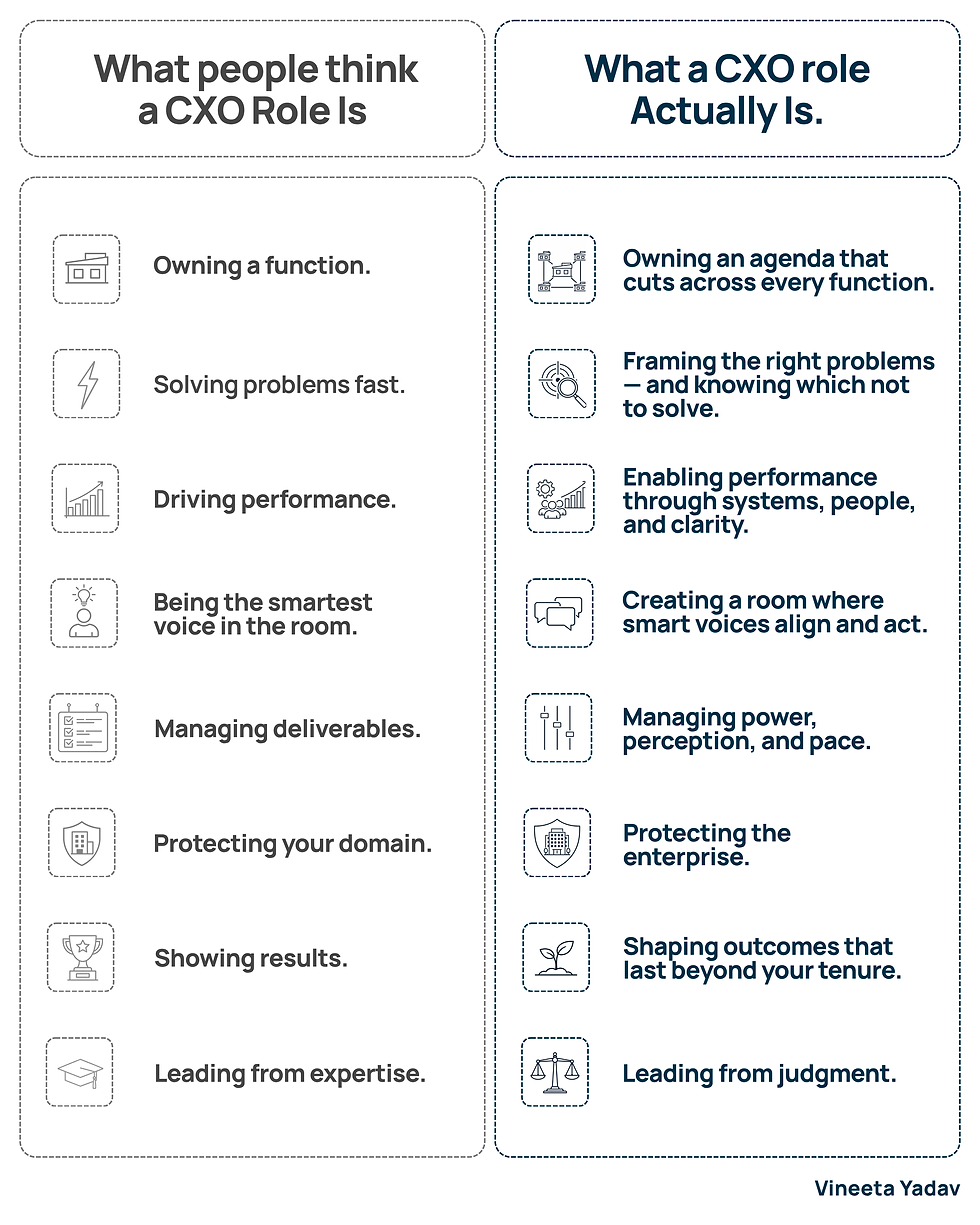
The hardest shift in leadership is not becoming a CXO.
It’s realising the job you were excellent at is no longer the job you’re being paid to do.
A few months ago, I was coaching a business head who had just stepped into his first CXO role.
On Day 1, he told me confidently:
"I know what I need to do. I’ve been doing this work for years."
Three weeks later he said something very different.
"This job isn’t harder. It’s just a completely different game."
He wasn’t struggling with capability.
He was confronting the shift from leading a function to carrying the enterprise.
Most leaders think the CXO role is about:
• solving problems faster
• driving performance
• being the smartest voice in the room
• protecting their function
That’s the mindset that got them promoted.
The real job looks very different.
It’s about what happens between functions, not inside one.
• Framing the right problems
• Knowing which ones not to solve
• Enabling performance through systems and alignment
• Managing power, perception, and pace
• Protecting the enterprise
• Leading from judgment, not expertise
These shifts are rarely taught.
Most leaders learn them the hard way —in rooms where no one explains the rules,
but everyone expects you to play at the highest level.
If you’re stepping into a CXO role (or preparing for one), remember this:
You’re not being asked to do more.
You’re being asked to think differently.
And that’s the real work.
Which of these shifts surprised you most when you moved into enterprise leadership?
Comments